
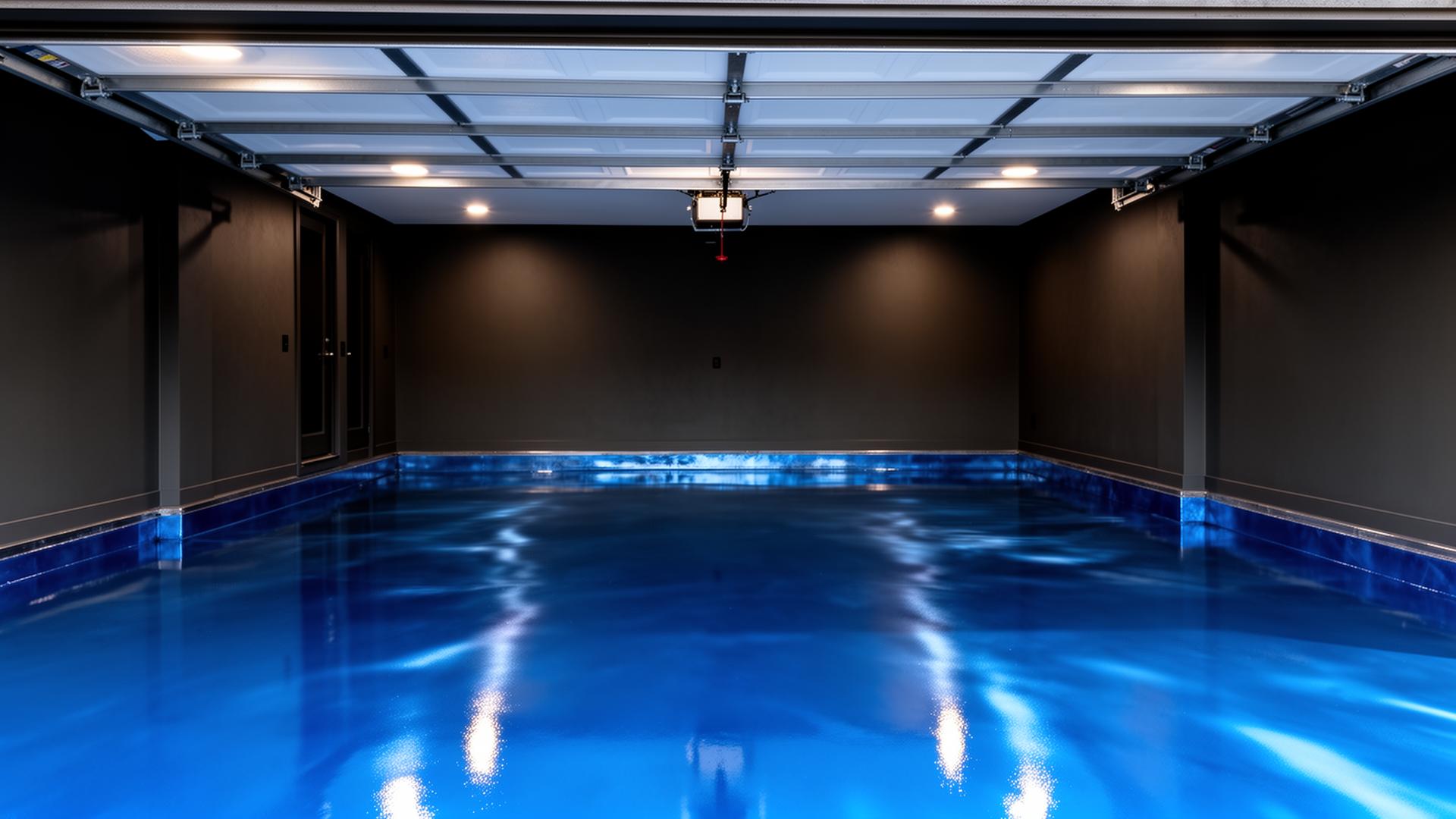
Most floor coating contractors blur the line between epoxy and polyaspartic. The truth is they're two very different materials with different strengths, weaknesses, and price points. This honest, technical comparison from a working Huntsville installer breaks down exactly when to choose each system — and when to use them together.
- Epoxy: stronger basecoat adhesion
- Polyaspartic: UV stable, fast cure
- Hybrid system: best of both worlds
- Both available across North Alabama
What Epoxy Is (and Isn't)
Epoxy is a two-part thermoset resin that cures by chemical reaction between a base resin and an amine hardener. It's been used as a floor coating for over 50 years. It bonds aggressively to properly profiled concrete, builds thickness in a single pour, and provides excellent chemical resistance.
Epoxy's two weaknesses: it's not UV stable (will yellow under sunlight) and it has a relatively long cure window (24–48 hours per coat), which means longer project timelines.
What Polyaspartic Is (and Isn't)
Polyaspartic is an aliphatic polyurea variant developed in the 1990s as a corrosion coating for steel bridges. It's fully UV stable, cures in hours instead of days, and is dramatically more scratch-resistant than epoxy.
Its weaknesses: shorter pot life (30 minutes vs 90 minutes for epoxy) requiring more installer skill, higher raw material cost, and slightly lower film build per coat. It's also more sensitive to moisture during cure.
Side-by-Side Comparison for Huntsville Conditions
UV stability: polyaspartic wins. Cure speed: polyaspartic wins (single day vs 2–3 days). Cost: epoxy wins by 20–35%. Adhesion to fresh concrete: roughly equal. Scratch resistance: polyaspartic wins 4x to 6x. Cold weather install: polyaspartic wins (5°F vs 60°F minimum). Working window for installer: epoxy wins.
For Huntsville's hot, humid summers and direct-sun garage doors, the UV advantage of polyaspartic matters. For shaded interior commercial spaces with no time pressure, epoxy delivers excellent performance at lower cost.
The Hybrid System (What We Install Most)
Most Huntsville Floor Coatings residential installations use a hybrid: a pigmented 100%-solids epoxy basecoat with full flake broadcast, sealed under a UV-stable polyaspartic topcoat. This combines epoxy's superior adhesion and thickness with polyaspartic's UV stability and scratch resistance — at a cost between pure epoxy and pure polyaspartic.
When to Choose Pure Epoxy
Pure epoxy makes sense for: interior commercial floors with no sun exposure, decorative quartz broadcast systems, chemical containment areas, and budget-driven projects where UV isn't a factor. Most Huntsville garages don't fit this profile.
When to Choose Pure Polyaspartic
Pure polyaspartic is the right call for: single-day install requirements, cold-weather projects, outdoor applications (patios, pool decks), and high-end residential garages where same-day vehicle return is non-negotiable.
Cost Comparison Summary
Pure epoxy systems: $5–$8 per square foot. Hybrid epoxy/polyaspartic: $6–$10 per square foot. Pure polyaspartic: $7–$12 per square foot. See our dedicated cost pages for full pricing breakdowns by garage size.
Frequently Asked Questions
Which lasts longer in Huntsville: epoxy or polyaspartic?+
A polyaspartic topcoat outlasts pure epoxy in any sun-exposed application by roughly 2x. In shaded interior spaces, both deliver 10–15 year service life.
Can I install epoxy outside in Huntsville?+
No — epoxy yellows and chalks rapidly under UV. Use a polyaspartic or polyurea system for any outdoor concrete coating in Alabama.
Is the hybrid system as good as pure polyaspartic?+
For 95% of residential garages, yes. The hybrid combines epoxy's adhesion with polyaspartic's UV and scratch resistance at lower cost.
How do I know which system a contractor is actually installing?+
Ask for product data sheets and manufacturer names. A reputable Huntsville installer will name specific products (e.g., Penntek, Elite Crete, Sherwin-Williams General Polymers) and provide written specifications.