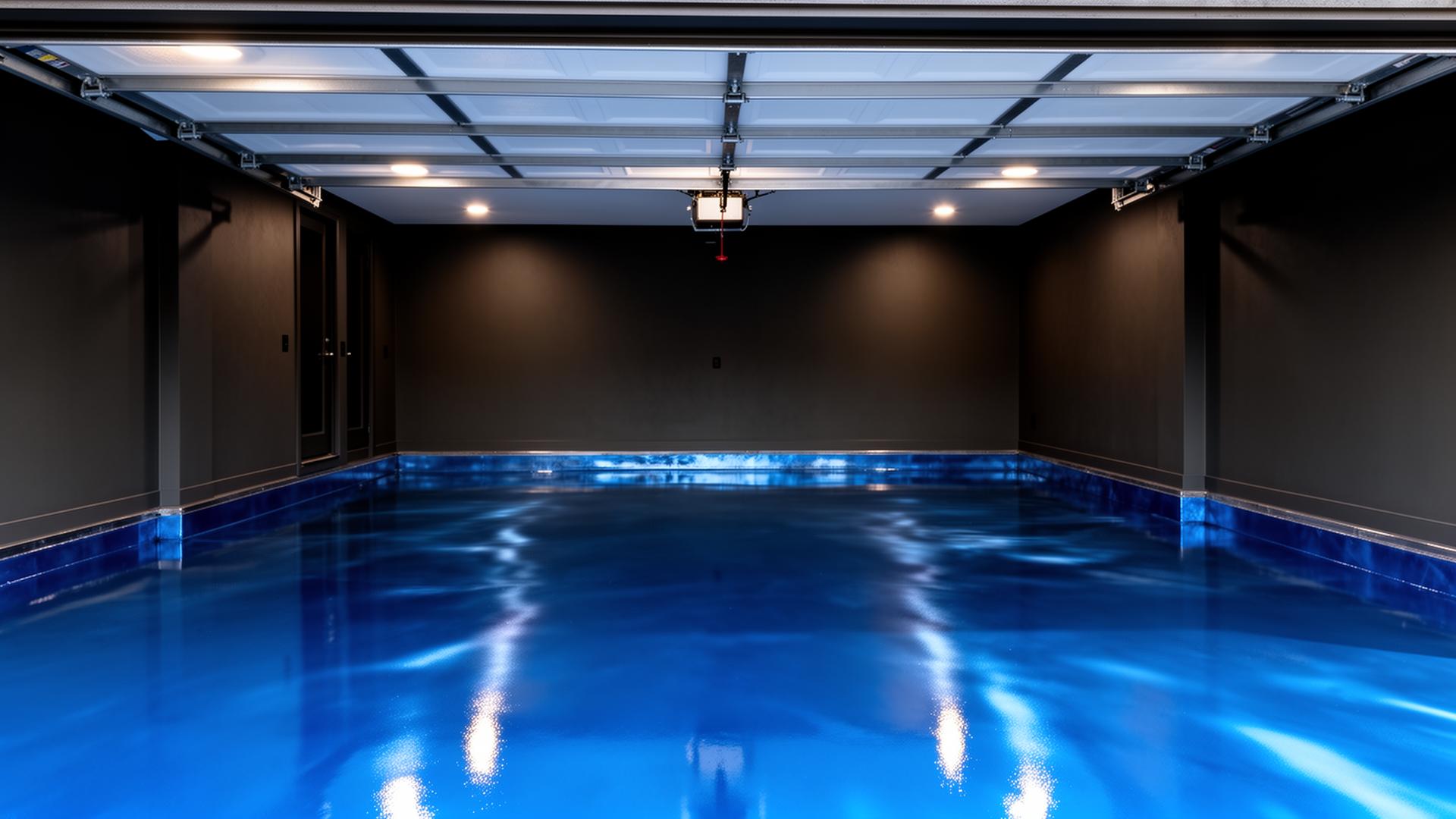
Polyurea and its sub-class polyaspartic are the most advanced garage floor coatings available. They cure in 1–2 hours, stay fully UV-stable in direct sun, resist hot-tire pickup permanently, and outperform traditional epoxy on every measurable specification. Here's why most Huntsville homeowners now choose a polyurea/polyaspartic system over straight epoxy.
What Polyurea Actually Is
Polyurea is a two-part thermoset elastomer with extremely fast cure chemistry. Polyaspartic is the slower, more workable sub-class designed specifically for floor coatings. Both deliver the same advantages: fast cure, UV stability, hot-tire resistance and excellent abrasion performance.
Polyurea vs. Epoxy — Practical Differences
Cure time: polyurea cures in 1–2 hours per coat, epoxy in 12–24. UV stability: polyurea is 100%, epoxy yellows. Hot-tire resistance: polyurea won't lift, epoxy can. Cost: polyurea systems run 20–30% more than pure epoxy. Lifespan: both deliver 15–20+ years installed correctly.
Best Build for Most Huntsville Garages
Our most-installed garage floor in Huntsville is a hybrid build: epoxy basecoat for maximum bond to concrete, decorative flake broadcast in the middle layer, and a polyaspartic topcoat for UV stability and hot-tire resistance. Best of both chemistries in a single system.
Frequently Asked Questions
Is polyurea worth the extra cost over epoxy?+
For most Huntsville garages, yes — the UV stability and hot-tire resistance pay for themselves over the life of the floor.
Can you install a polyurea floor in winter?+
Yes — polyurea cures correctly across a wide temperature range, even below freezing for some formulations.
Is polyaspartic the same as polyurea?+
Polyaspartic is a sub-class of polyurea designed for floor coating. The terms are often used interchangeably in residential marketing.