
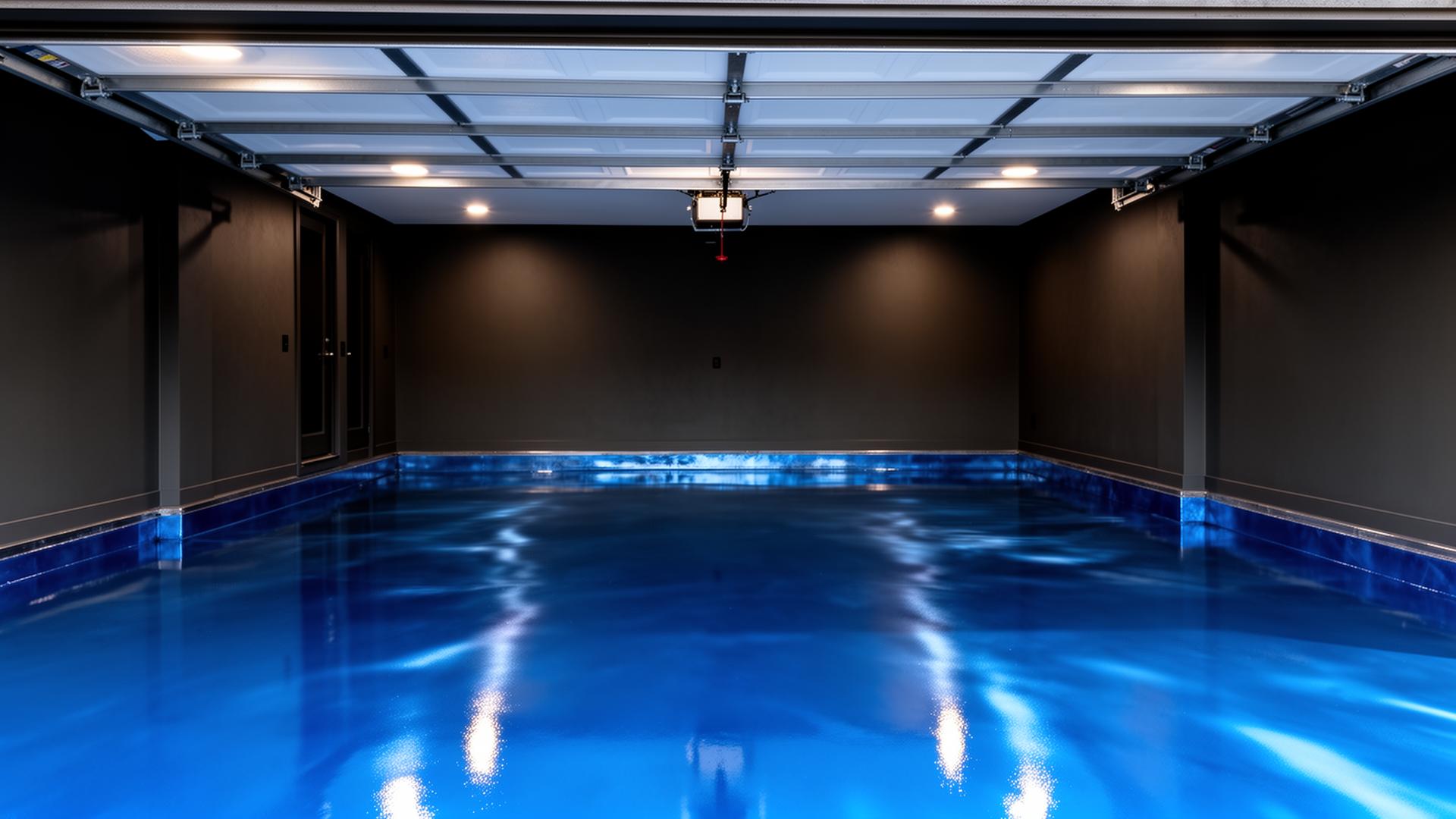
Both deliver attractive finished floors — but they're designed for very different uses and durability requirements.
- Look: Acid-Stained Concrete vs Epoxy Coating
- Surface protection: Acid-Stained Concrete vs Epoxy Coating
- Chemical resistance: Acid-Stained Concrete vs Epoxy Coating
- Stain coverage: Acid-Stained Concrete vs Epoxy Coating
- Maintenance: Acid-Stained Concrete vs Epoxy Coating
- Best application: Acid-Stained Concrete vs Epoxy Coating
Acid-Stained Concrete — Strengths
Look: Natural mottled marbled color Surface protection: Penetrating only — no barrier Chemical resistance: Limited — acids and oils penetrate Stain coverage: Cannot hide existing stains — actually highlights them Maintenance: Periodic re-seal (1–2 years) Best application: Indoor living spaces with sound clean slabs
Epoxy Coating — Strengths
Look: Solid color, flake, or dramatic metallic Surface protection: Full barrier coating Chemical resistance: Excellent Stain coverage: Hides cracks, stains, and discoloration completely Maintenance: None for 15+ years Best application: Garages, shops, commercial, basements
Bottom Line
Choose stained concrete for indoor living spaces where you want a natural look on a clean slab. Choose epoxy for garages, shops, and any space that needs real chemical, impact, and stain resistance.
Frequently Asked Questions
Which one do you recommend for Huntsville?+
Choose stained concrete for indoor living spaces where you want a natural look on a clean slab. Choose epoxy for garages, shops, and any space that needs real chemical, impact, and stain resistance.
Can you install either system?+
Yes — we install every system discussed here every week across North Alabama. We'll recommend the right one for your specific slab, use case, and budget.
Do both come with warranties?+
Our professional installations carry a 15-year written warranty regardless of which chemistry we install.
Can I see examples?+
Yes — request samples and finished-floor references during your free on-site estimate.